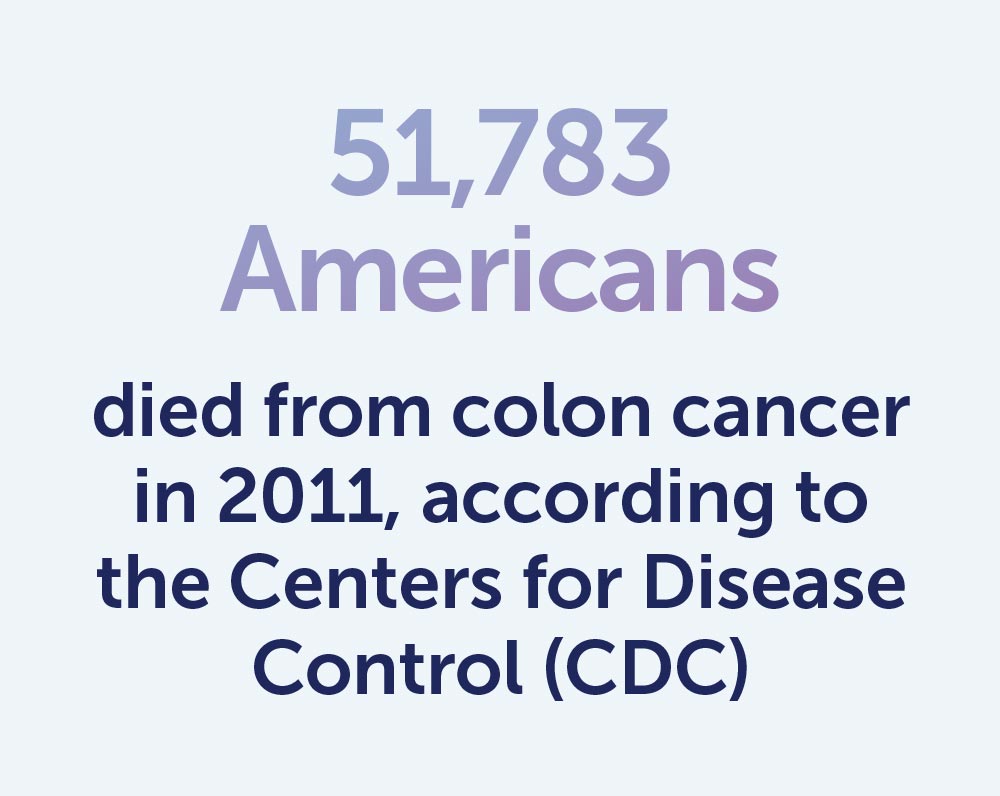

The Buffalo Medical Group provides its patients with several important gastrointestinal diagnostic tests to ensure early detection, prevention and treatment of a variety of diseases, many of which could be life-threatening, as in the case of cancer.
A colonoscopy is a test that enables the physician to examine the lining of the entire colon (large intestine) to detect the presence of polyps, sample tissue for biopsy, stop bleeding, and band internal hemorrhoids. Polyps are pre-cancerous growths that can become colon cancer if not removed. If polyps are found, they can be removed during the colonoscopy. This examination involves the use of a slim flexible tube with a lighted camera at the tip. This enables the physician to easily inspect, diagnose and treat many common lower GI disorders such as Ulcerative Colitis, Crohn's Disease, and Diverticulosis/Diverticulitis, as well as polyps and cancerous lesions.
A screening colonoscopy is recommended for all people over 50 years of age, or earlier for those with a family history of colon cancer or polyps. It is used as a tool for early detection and removal of potentially cancerous polyps. Since there may not be any symptoms in the early stages of colon cancer, this exam is extremely important as a screening tool.
A flexible sigmoidoscopy is similar to a colonoscopy, but this examination is limited only to the rectum and lower (sigmoid) portion of the colon.
An EsophagoGastroDuodenoscopy (EGD) or gastroscopy, is performed using a slim flexible scope to visualize the entire upper portion of a patient's GI tract including the esophagus, the stomach and the first part of the small intestine (duodenum). Tissue sampling (biopsy), dilation of a narrowing in the upper digestive tract, cauterization (burning) of areas of bleeding, and treatment of esophageal motility disorders can be performed. The most common reasons for performing this test are to diagnose or evaluate GERD (indigestion or reflux), Barrett's Esophagus, peptic ulcer disease, strictures (narrowing), swallowing disorders, hiatal hernias, gastritis, H. Pylori and Celiac Disease.
A small bowel enteroscopy is similar to an EGD, but enables the physician to examine beyond the duodenum and look well into the small intestines using a longer scope. This test is often performed to locate the source of anemia or blood loss when it is not apparent in the upper GI tract or colon.
An Endoscopic Retrograde Cholangiopancreatography (ERCP) is also similar to an EGD, but its main purpose is to visualize the bile ducts and pancreatic ducts with use of an endoscope and fluoroscopy (a type of x-ray). ERCP is used to evaluate the ducts for stones, strictures (narrowing), cancer, or other abnormalities. A sphincterotomy to enlarge the bile duct opening is often performed to allow for removal of gallstones from the bile duct or for the placement of stents (bypass tubes). Common conditions for performing this test include jaundice (yellowness of the skin and whites of the eyes), for removal of gallstones, and the diagnosis and treatment of pancreatic or bile duct cancers.
An endoscopic ultrasound (EUS) is a very specific scope that allows performance with a sonogram exam (ultrasound) from within the GI tract (rather than from the outside) and is positioned in the esophagus, stomach or small bowel. This diagnostic test enhances the view of structures which lie immediately outside the upper GI tract and assists in determining the extent of lesions or tumors. Moreover, this enables the physician to do a guided biopsy which otherwise may be difficult or impossible if attempted externally.